
The Flying Wall
Adaptive extension | 2024 | Barcelona, Spain
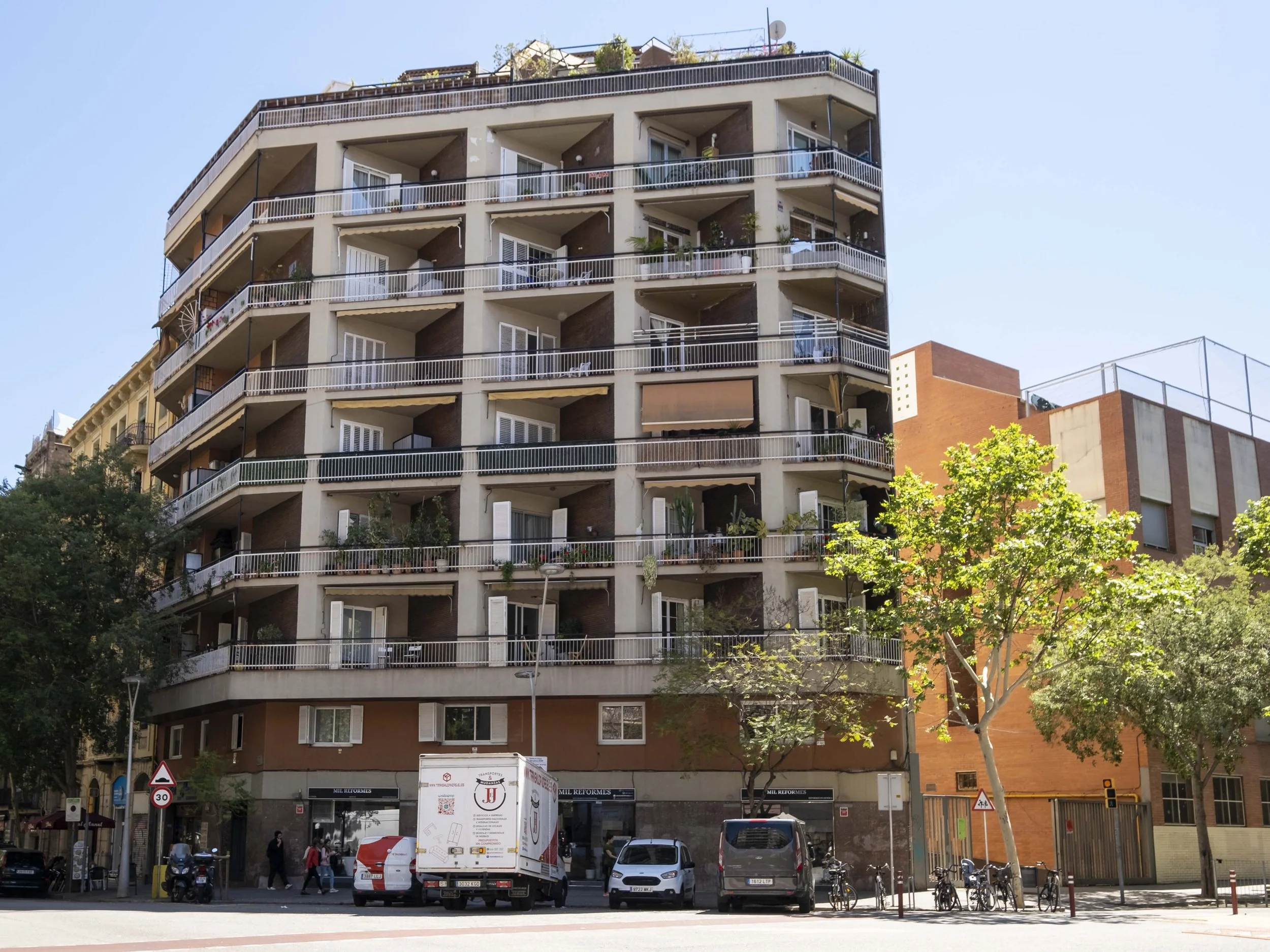

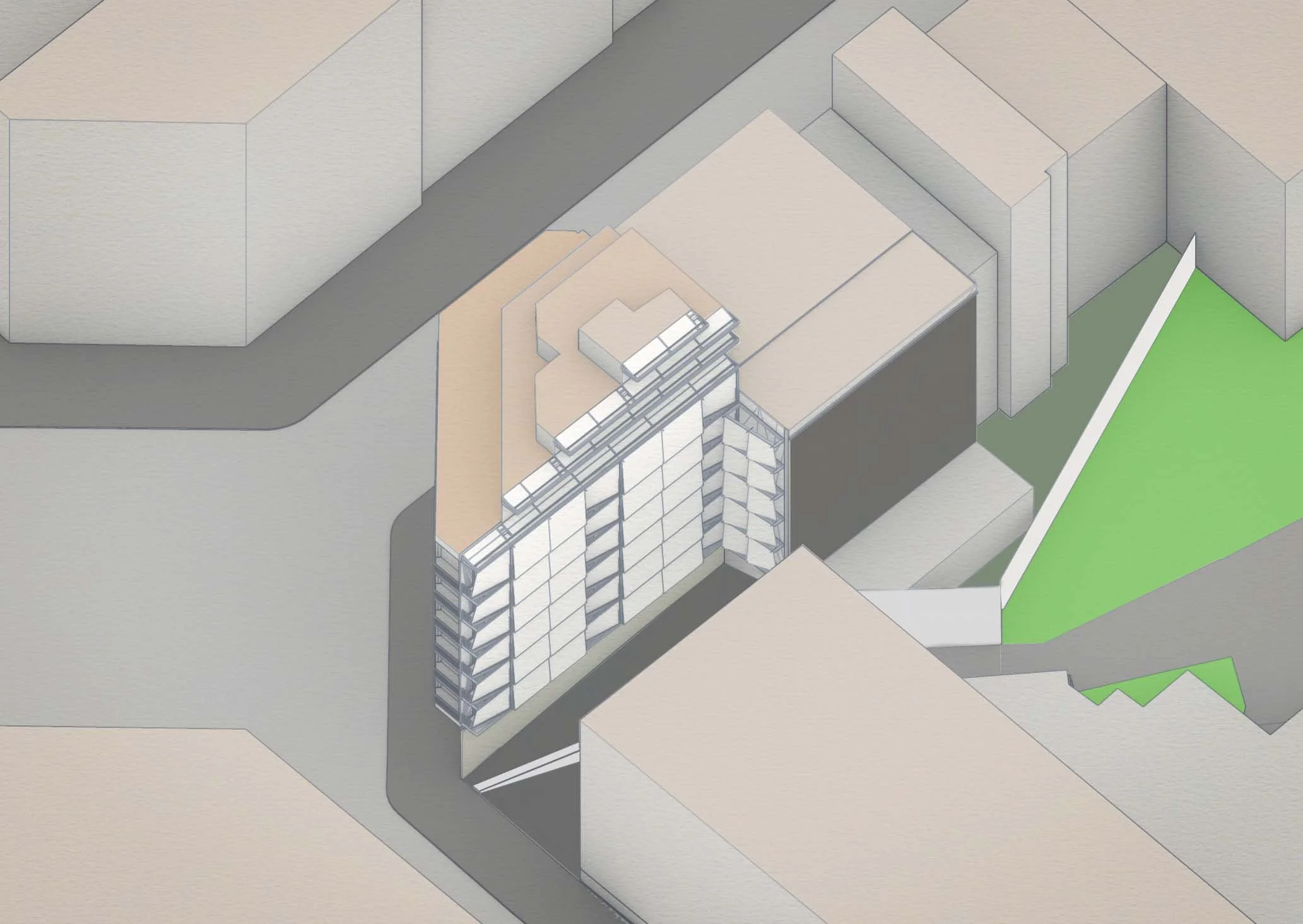
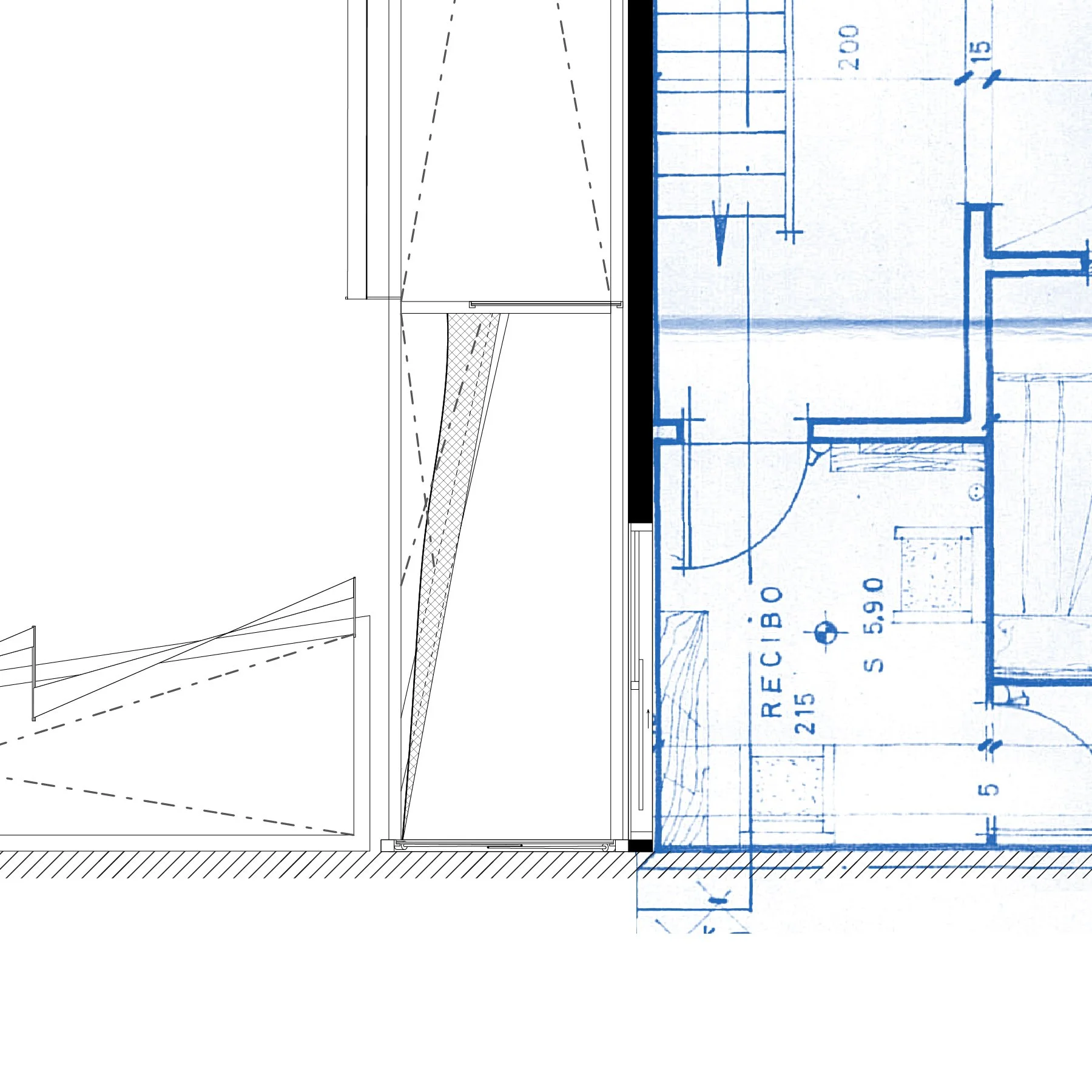
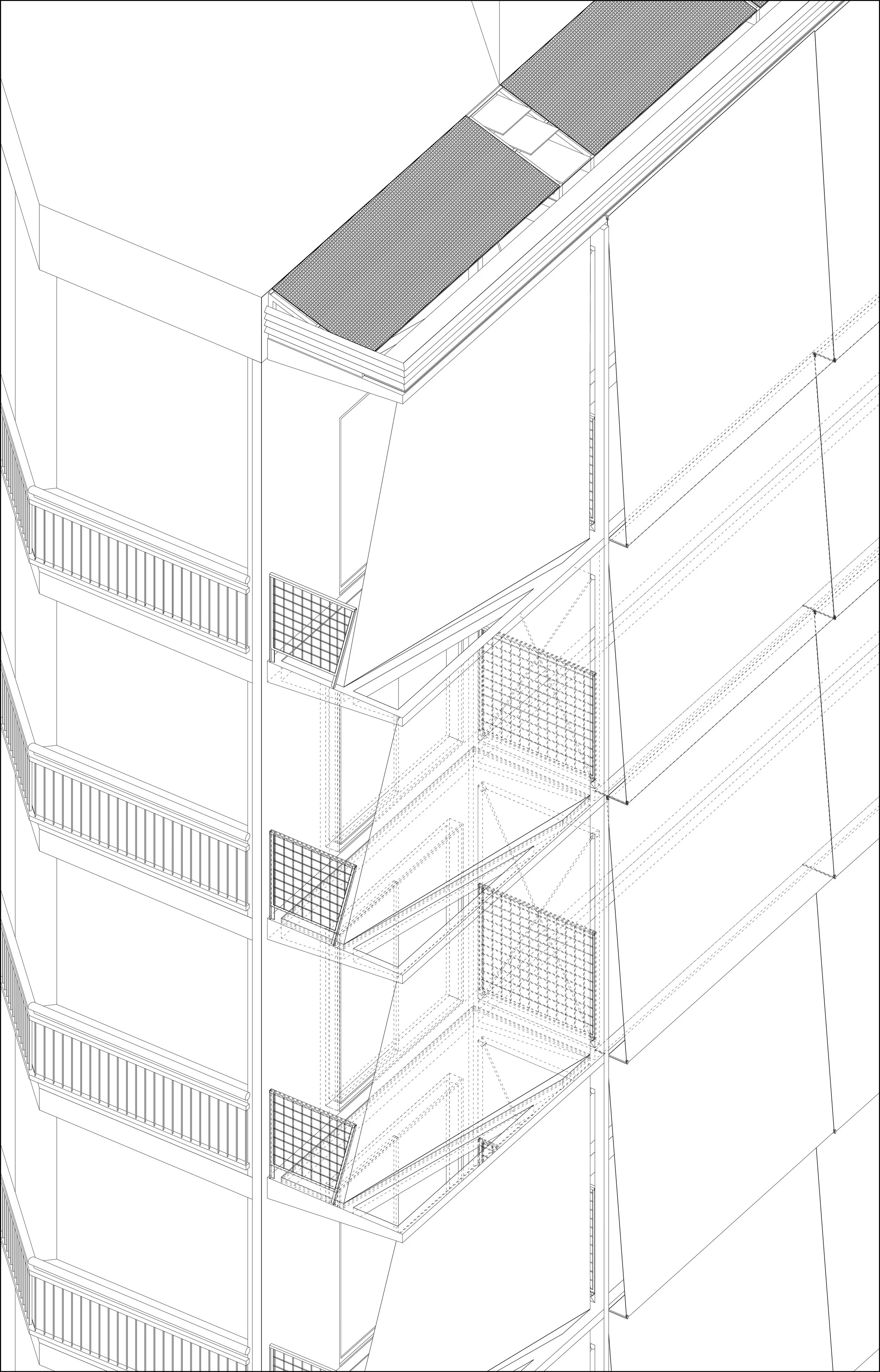
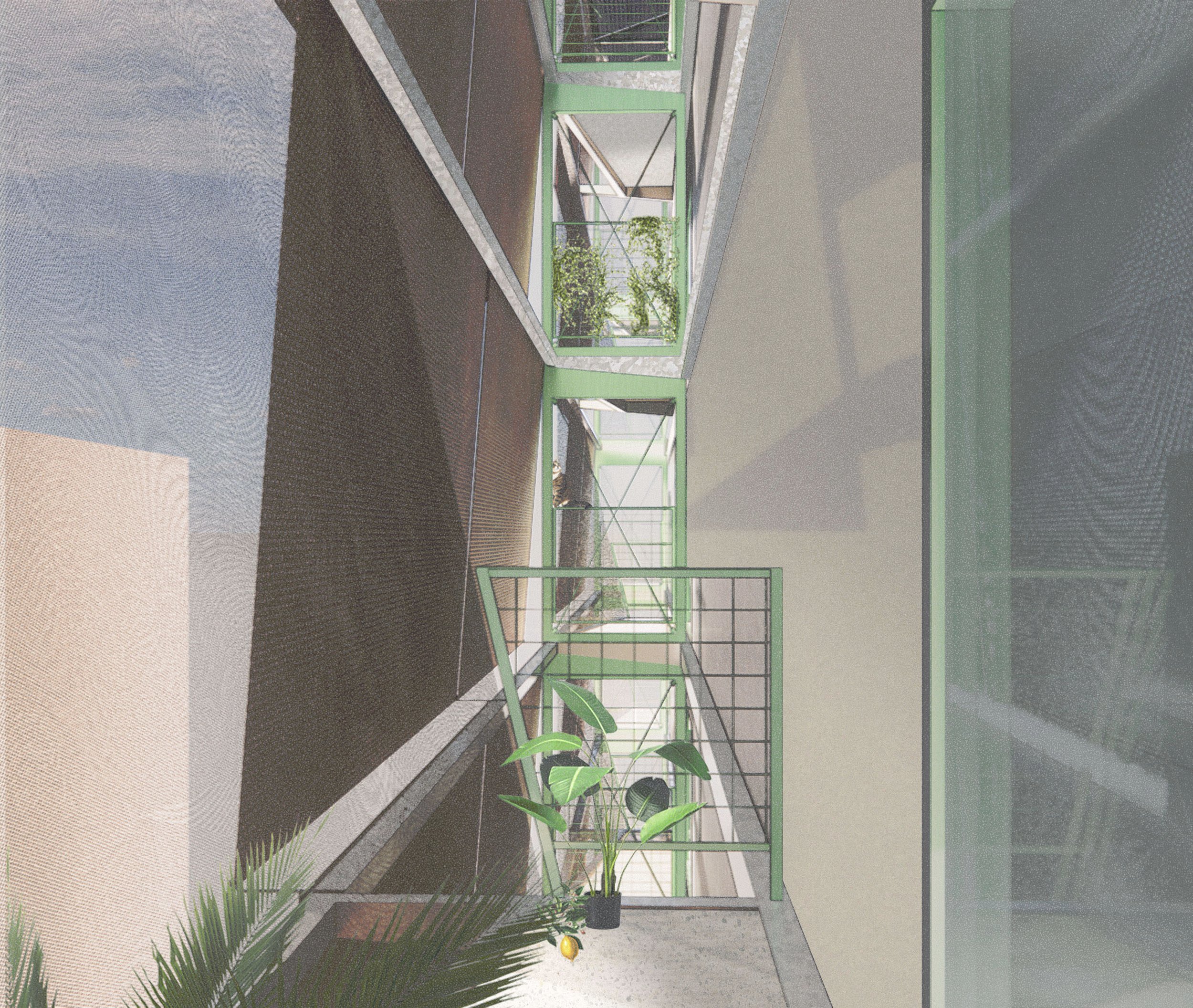
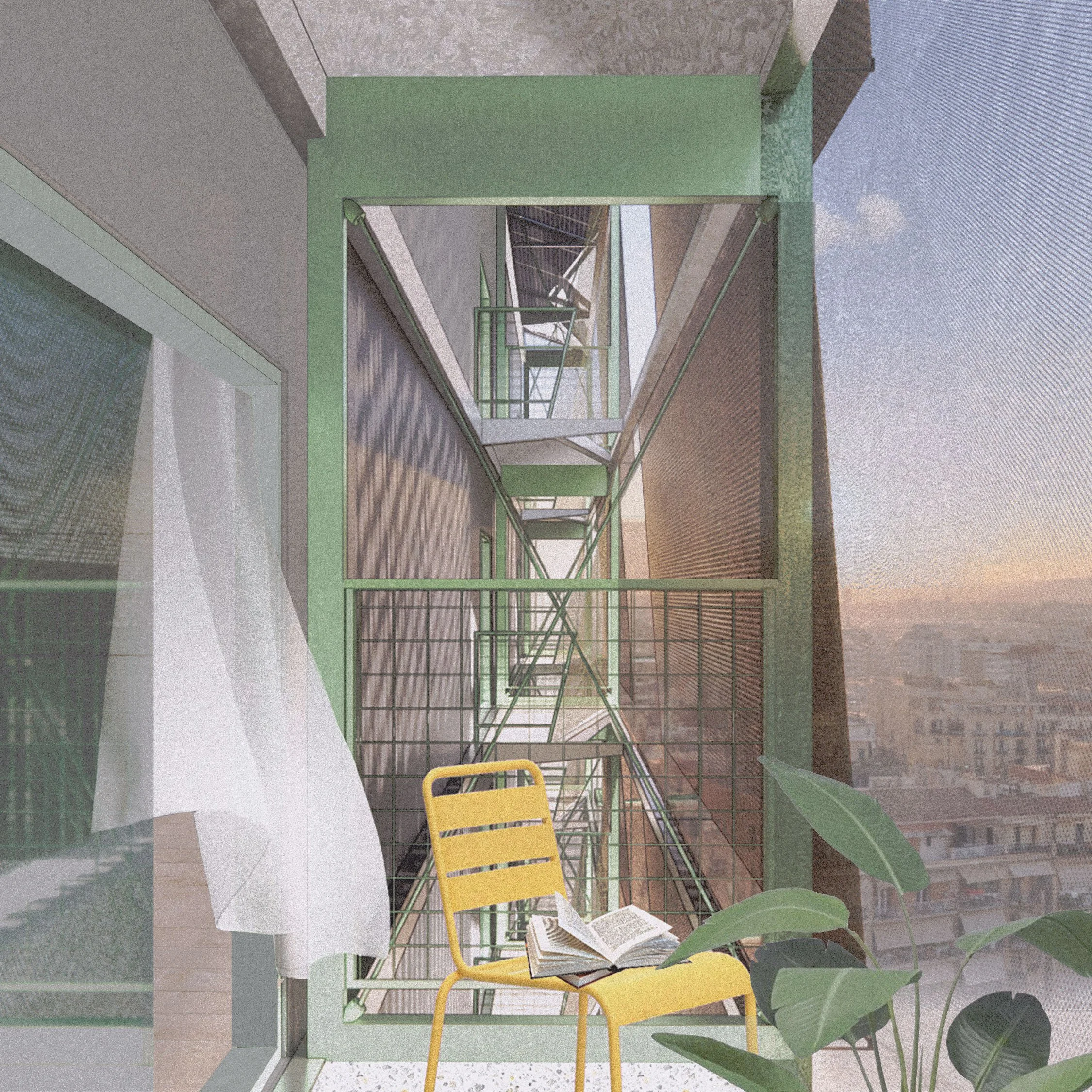
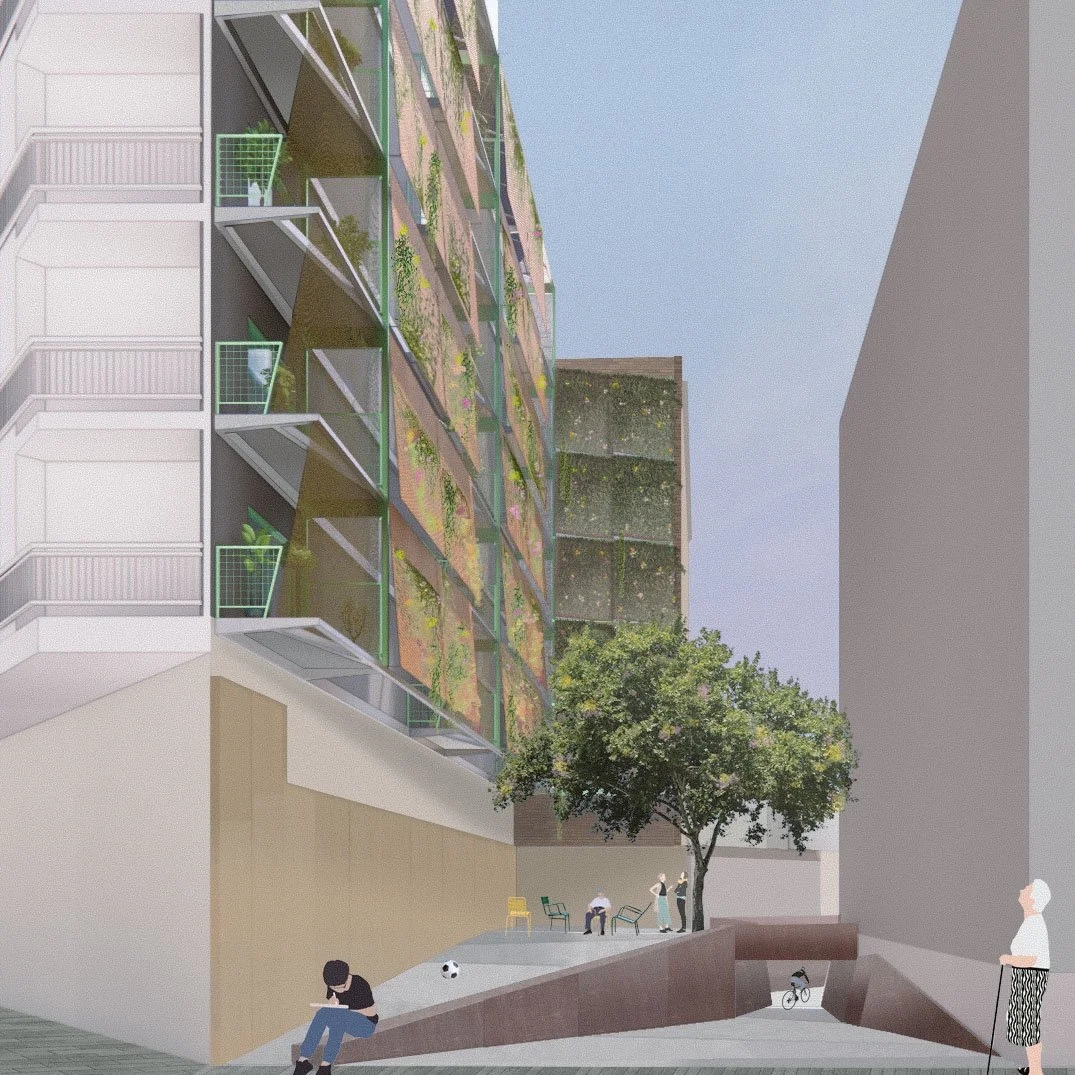
Project responds to an open call for ideas by the municipality of Barcelona, regarding adaptation of ‘blindwall’ conditions within the urban fabric of the city into spatially and environmentally resourceful opportunities. The project proposes the addition of a second facade across the abutting blind walls at neighboring buildings on Carrer de Napols 103 & 99, located at Eixample district of Barcelona, that presents opportunities for improved building envelope performance, extended living spaces, solar farming and green walls, while aspiring to resolve an urban condition through marking the entrance into the public garden located in the midst of the city block.
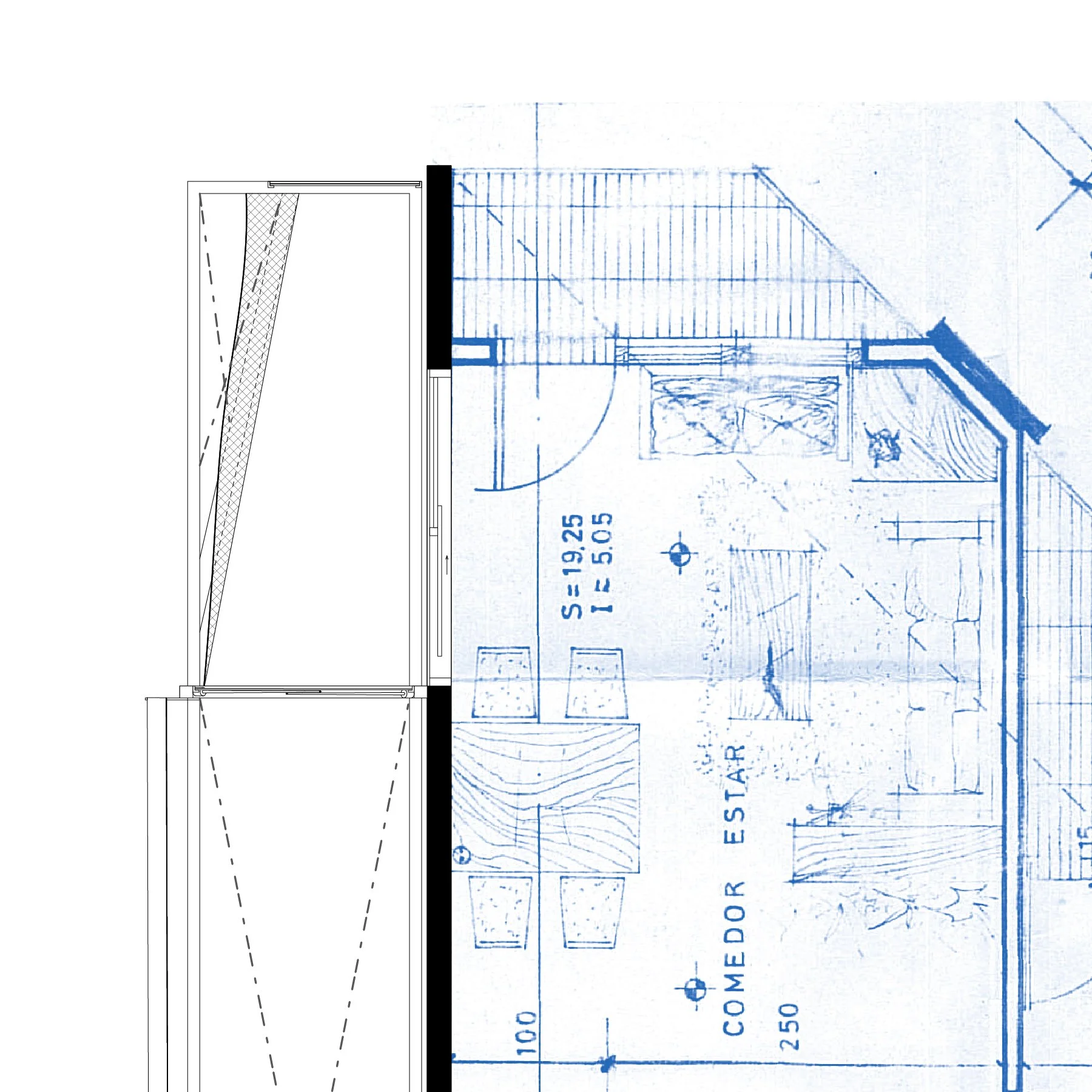
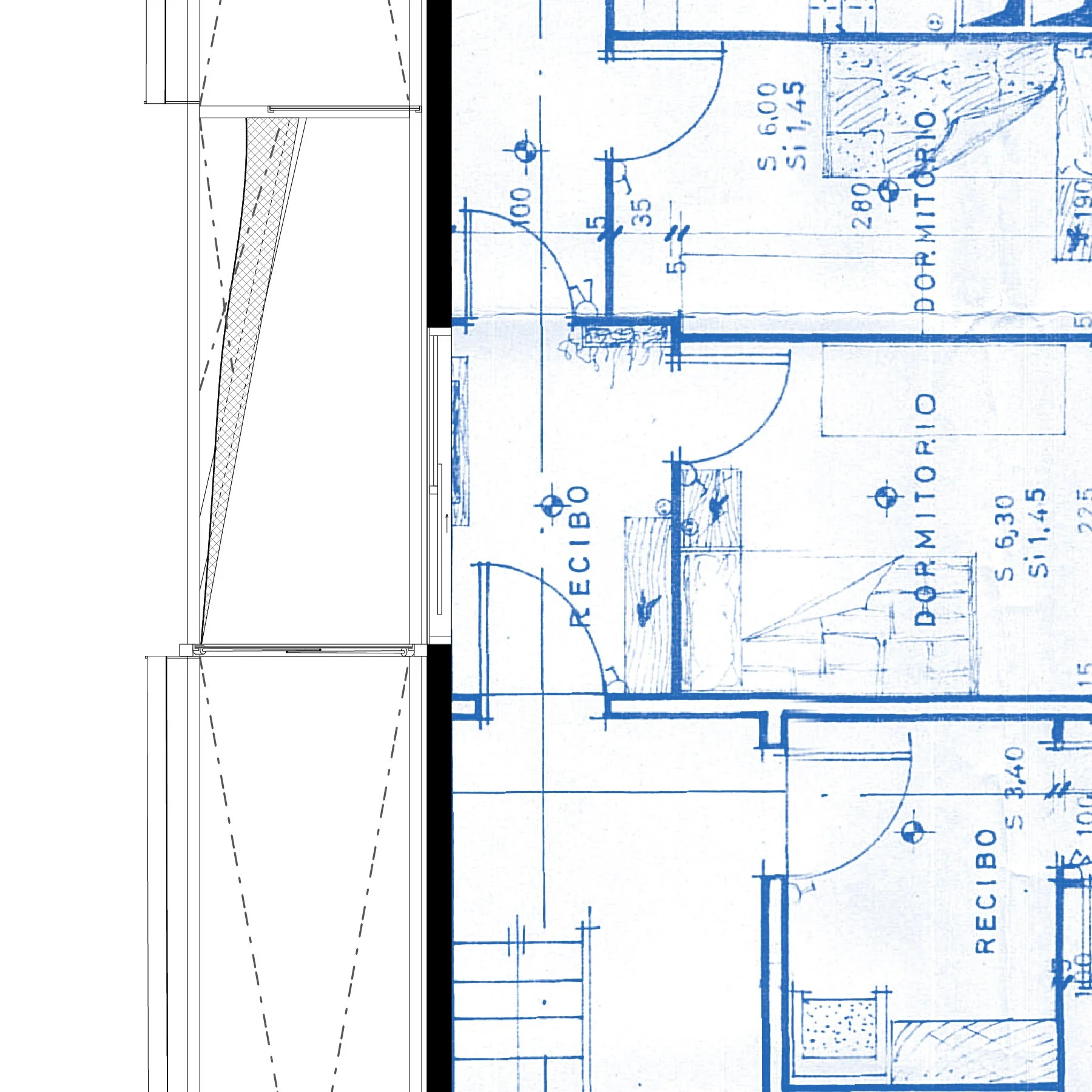
From a performance perspective, proposal aspires to provide a solution that extends usable space in a manner that reduces envelope heat gain and building cooling loads. A lightweight deck and framing system is devised to create a cavity screened by perforated metal panels, encouraging natural drafts while reducing solar exposure on blindwalls on both properties. Small projecting balconies are proposed at property No. 103, which simultaneously bring additional light and air into units. Openings with sliding glass panels promote natural ventilation through units while cavity shafts created by the double skin facade reduce overall heat gain of the existing building masses, and encourage cooling drafts in warmer months thanks to the South facing orientation. The framework simultaneously creates an infrastructure for vertical farming and vegetation, through devising the perforated metal rainscreen system as a sub-structure for future greenwalls to be utilized by municipality, which is an urban planning policy becoming increasingly commonplace in Barcelona. The ‘second skin’ facade consists of a galvanized steel deck system, supported by cantilevering outriggers and vertical piers with integral tension cables. At balconies a high-strength metal mesh screen is draped as the enclosure. Bays with ventilation shafts are enclosed with stacking perforated metal panels that could couple as infrastructure for future green walls. A solar farm facility is devised at uppermost decks to reap benefits of ideal solar angles and exposure at South facing facade.
The addition interprets the proportions of the existing building facade adapted simultaneously as a termination condition and a page turn within the fabric of the block, while pronouncing the entry into the shared public gardens located at the core of the block, the Carratera Antiga d’Horta.
Notes: Site photographs and existing building plan courtesy of Ajuntament de Barcelona.