
Suncomb
Temporary installation | 2026 | Tallinn, Estonia
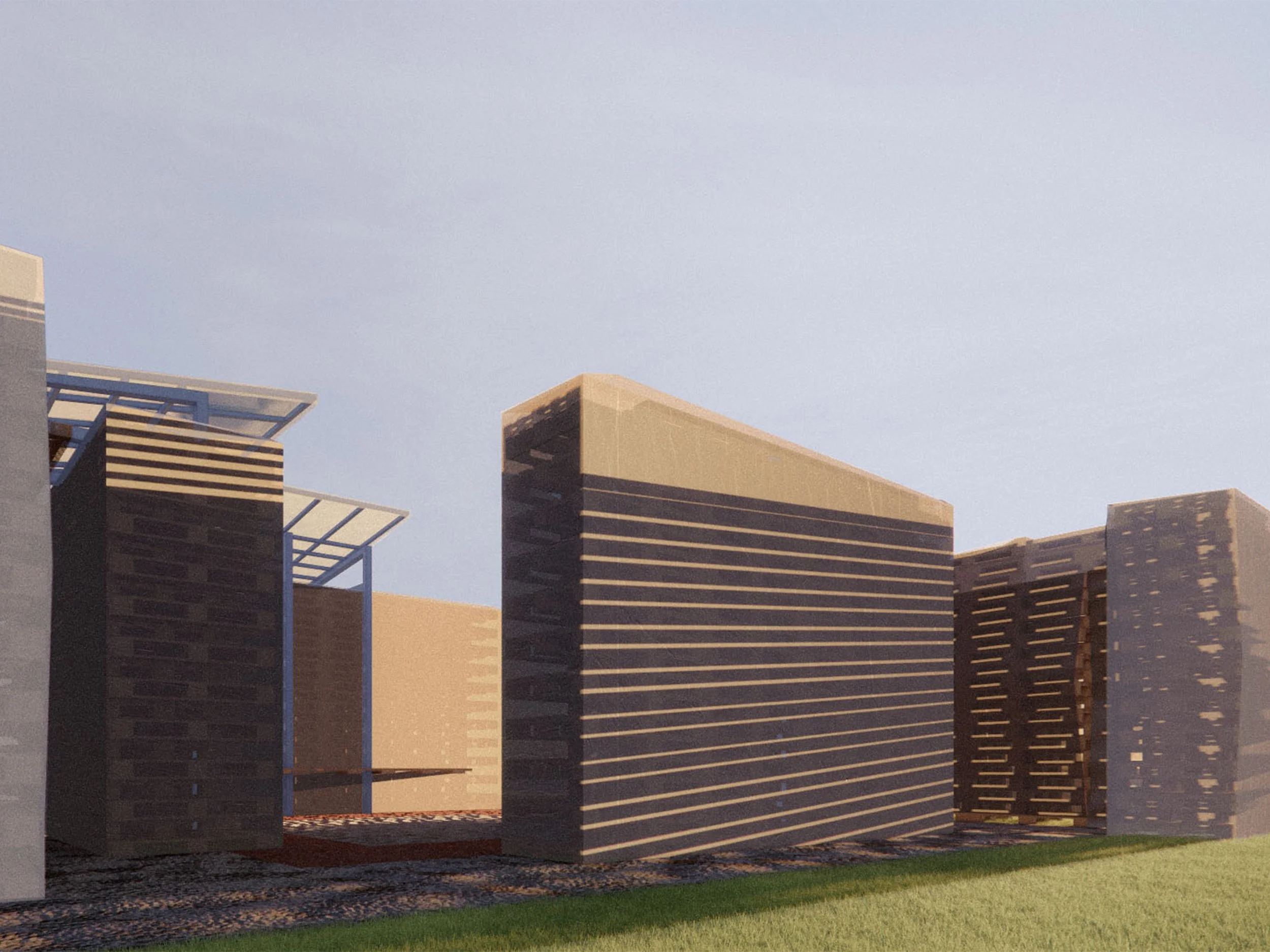
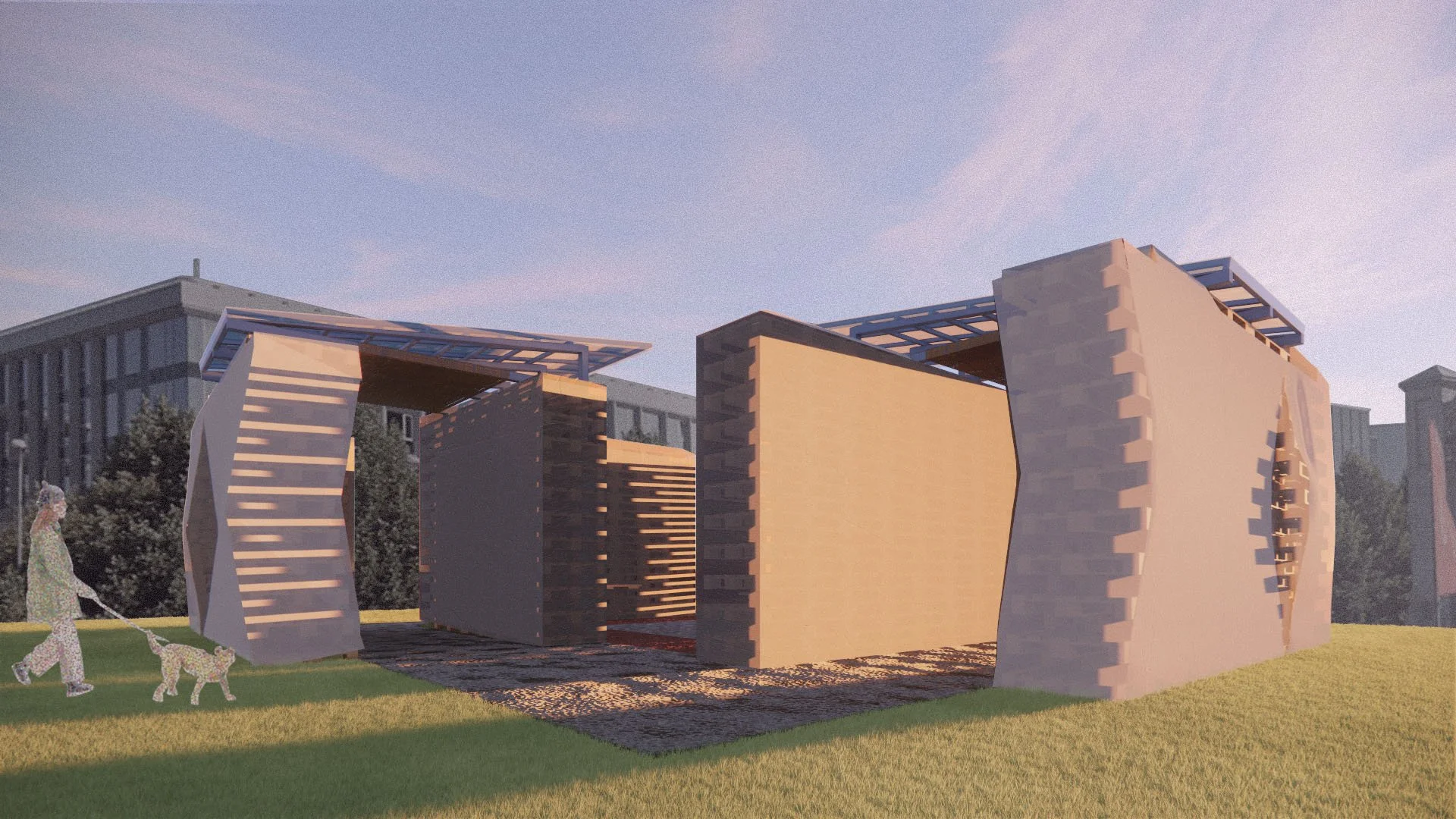
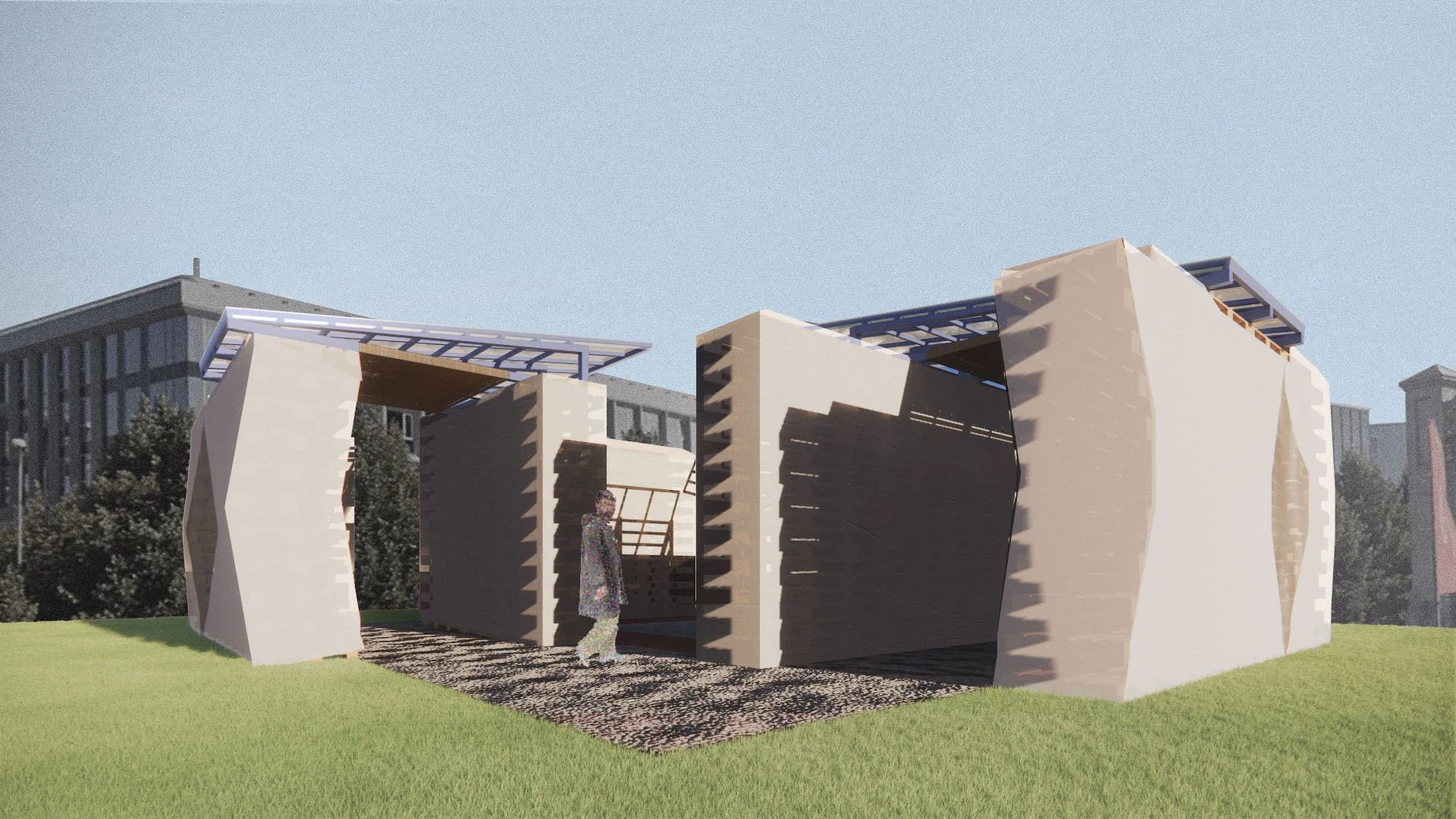
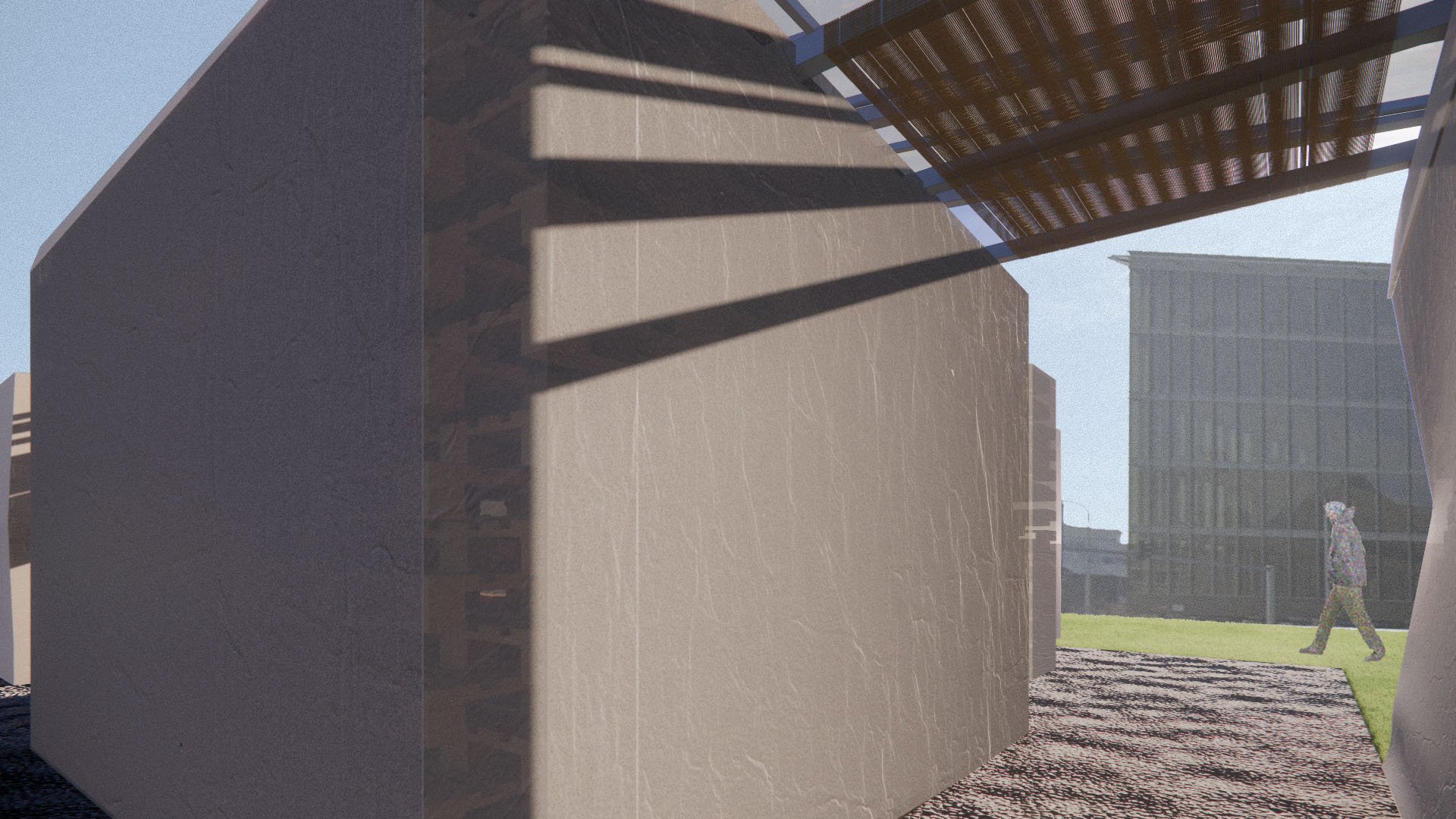
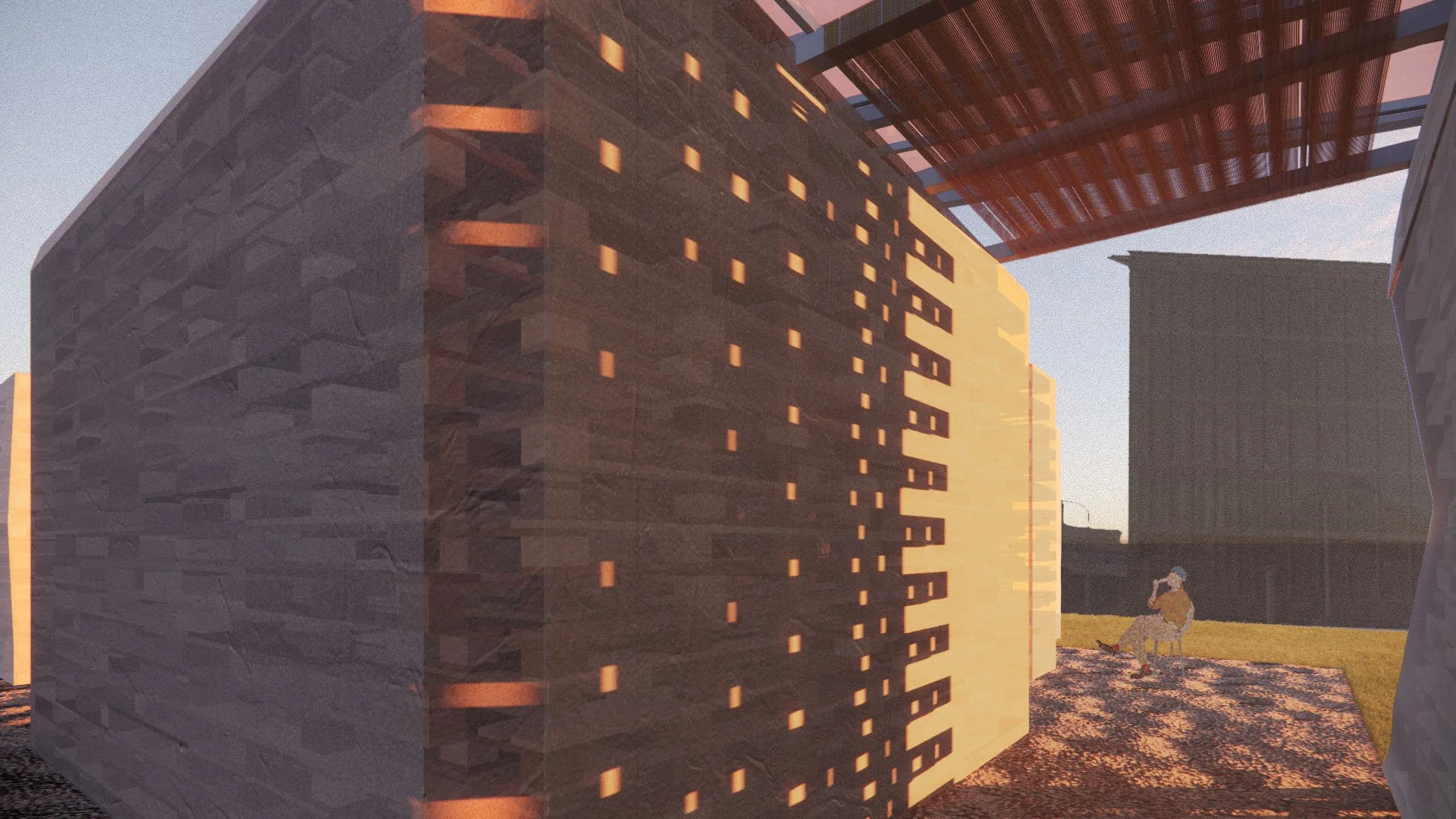
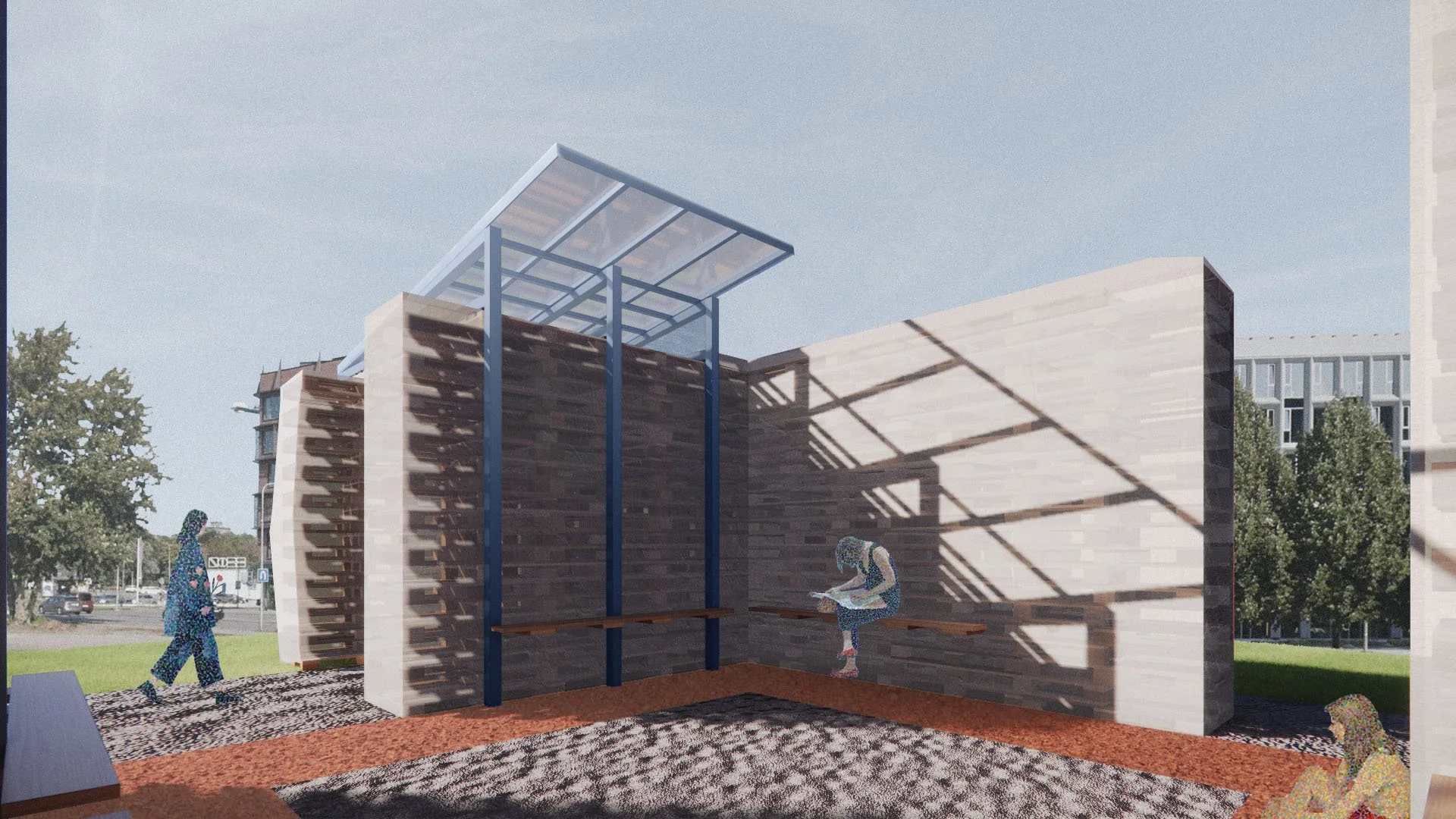
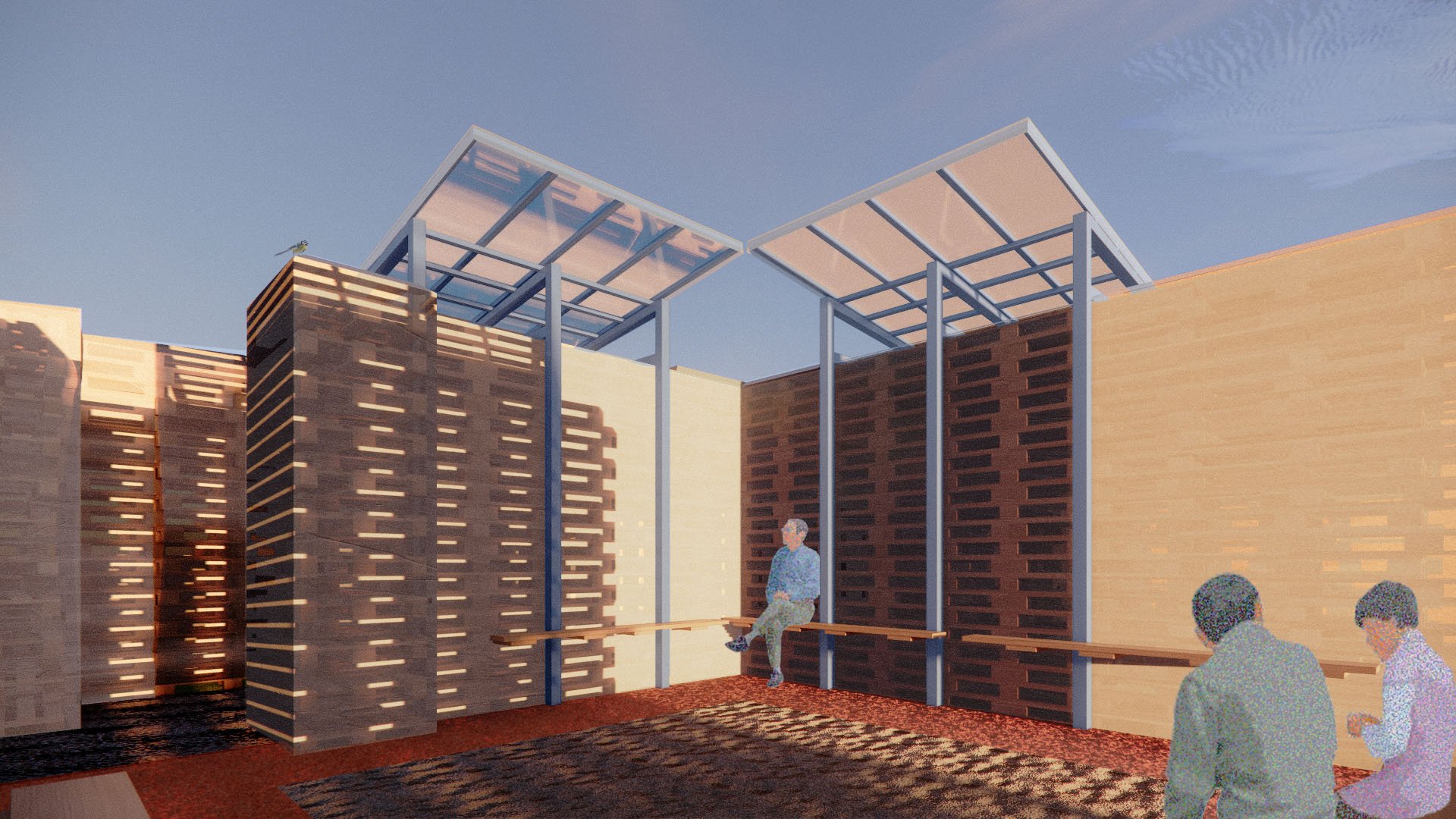
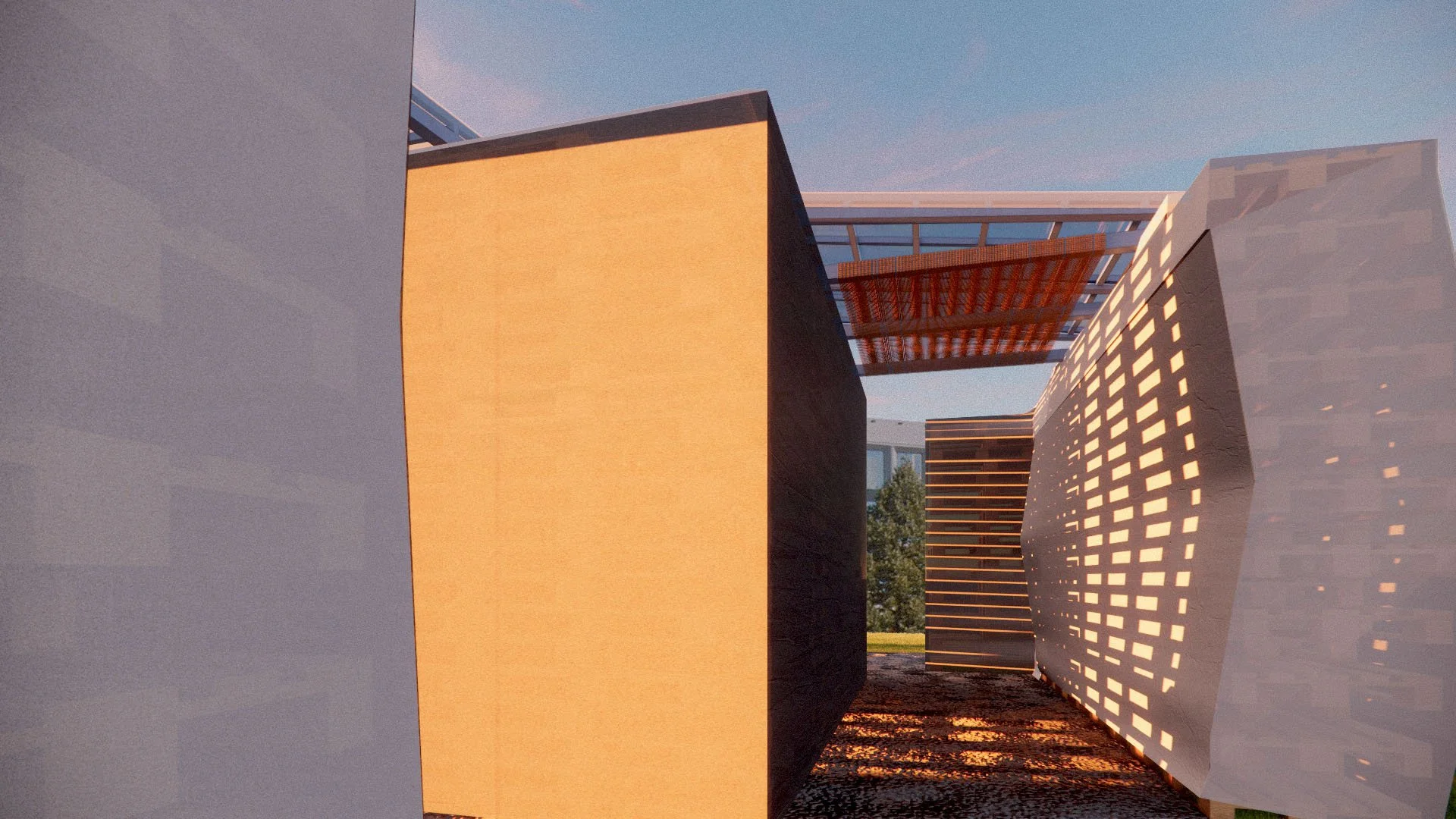
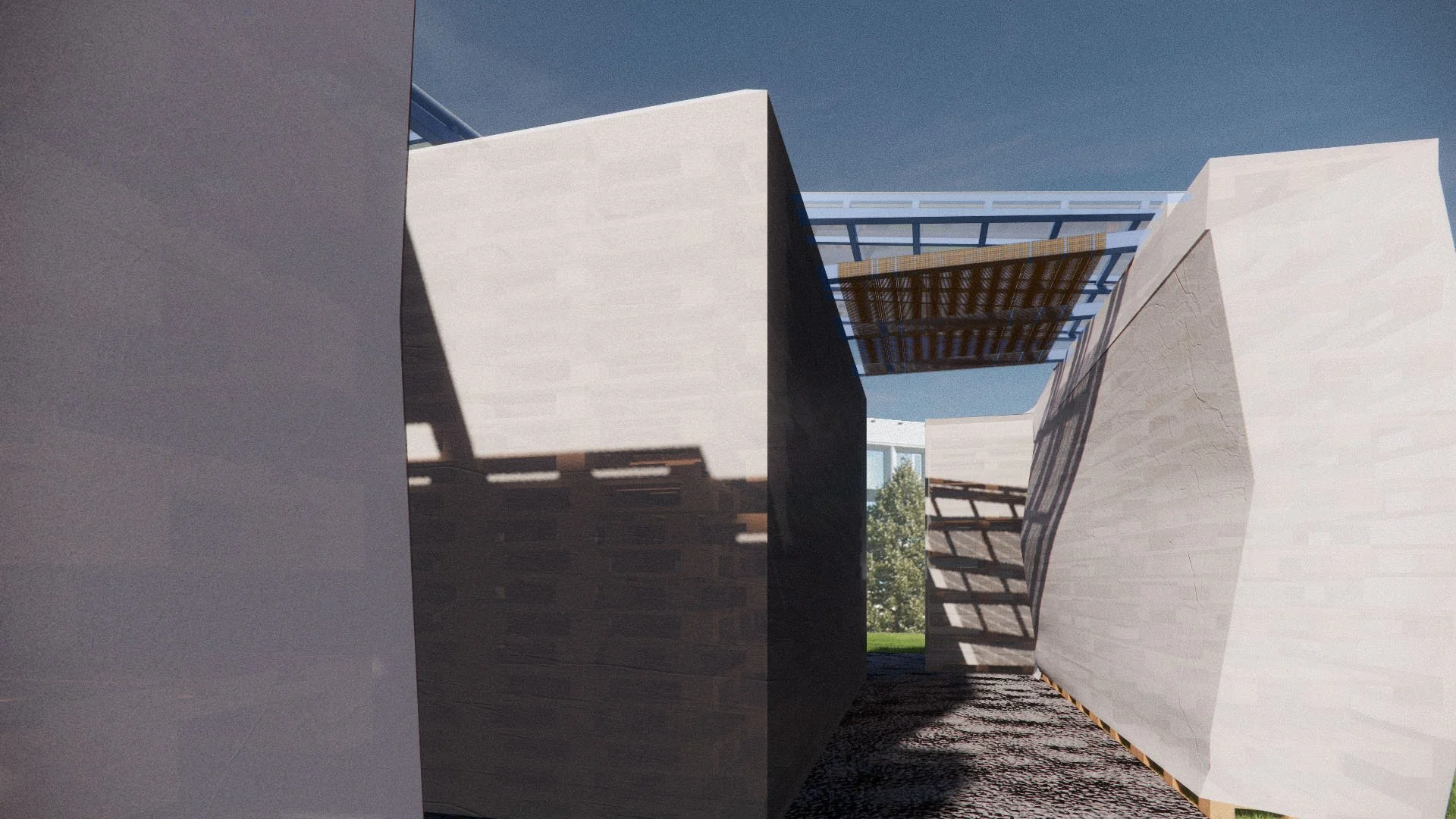
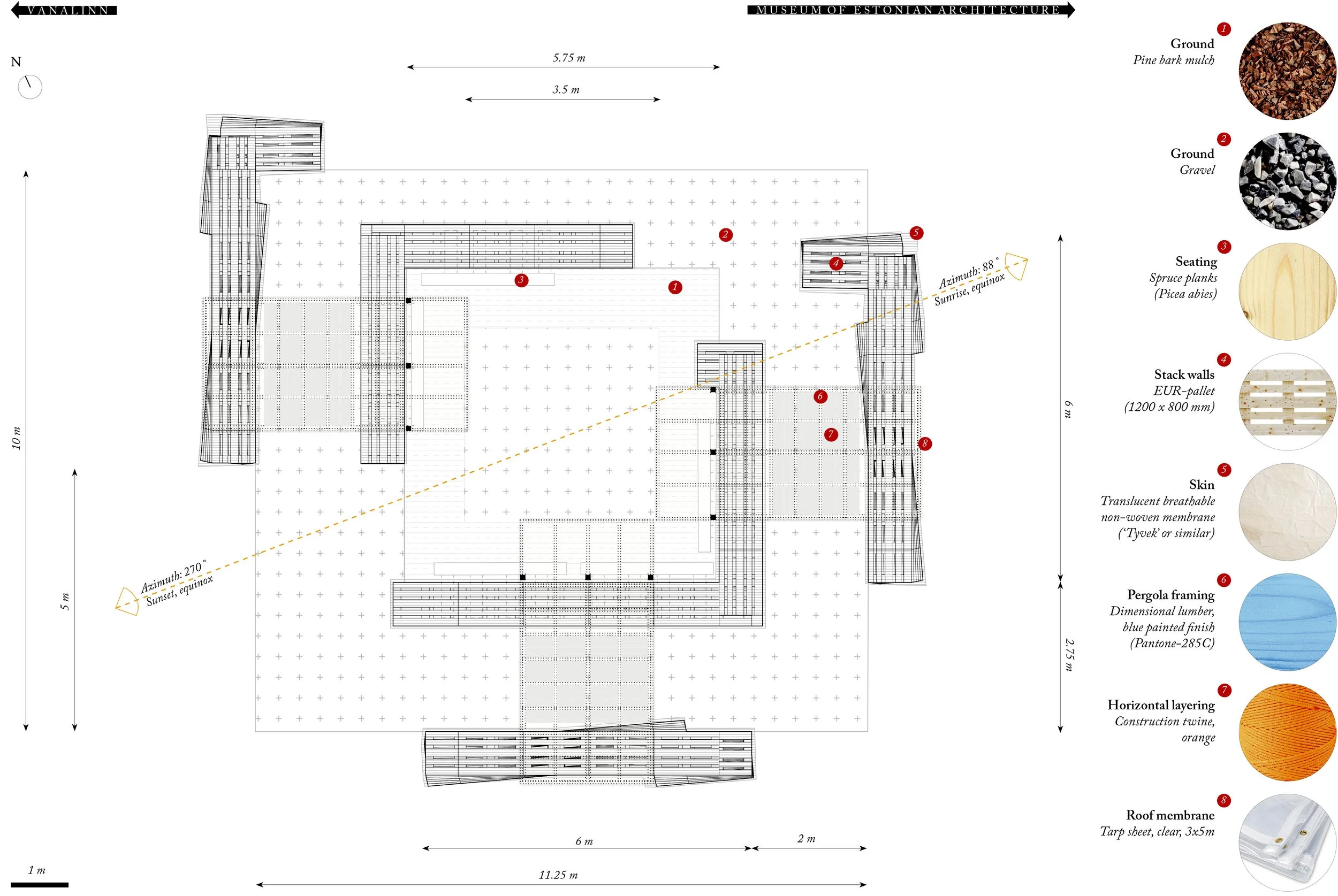
In a world where value of mainstream architecture is ruled primarily by appearances, ‘Suncomb’ is an installation that advocates for the possibility of an atmospheric architecture that prioritizes dynamic spatial depth and sensory experience. Drawing inspiration from proportional relations that characterize the Estonian “rehielamu” typology, and country’s rich tradition of textile crafts, proposal curates series of vertical and horizontal surfaces, with varying qualities of translucency, to form a central court, deliberately oriented in relation to the local solar path in pursuit of a place-making strategy that mines a perpetual play of light, shadow, color and textural conditions. In an era of attention economy enamored with appearances, crafting a public space that dares to materialize an architecture of ambiance stands for the value of contextual rootedness of public architectural interventions, and the creative capacity of understated strangeness.
The fundamental conceptual underpinning of the project is the characterization of load bearing mass walls as enclosing planes with varying qualities of translucency, and superimposition of elements dispersed in perspectival depth to imagine architectural space as a kaleidoscopic construct directed by passage of time and user movement; opposing the logic of screens which operates through dictating appearances to be looked at. In this sense, ‘Suncomb’ becomes an artifact to be lived with and contemplated upon, bearing a spatial intelligence that unfolds over time, and evolves through the arc of seasons.The main courtyard, which essentially forms a public plaza, offers a meditative room where visitors are invited to take a seat and commune with ambient conditions that alternate temporally to create an architecture that ceaselessly renews itself. Installation also creates the potential for a site that could host temporary institutional programming or even act as an educational forum where circadian solar rhythms could be examined.
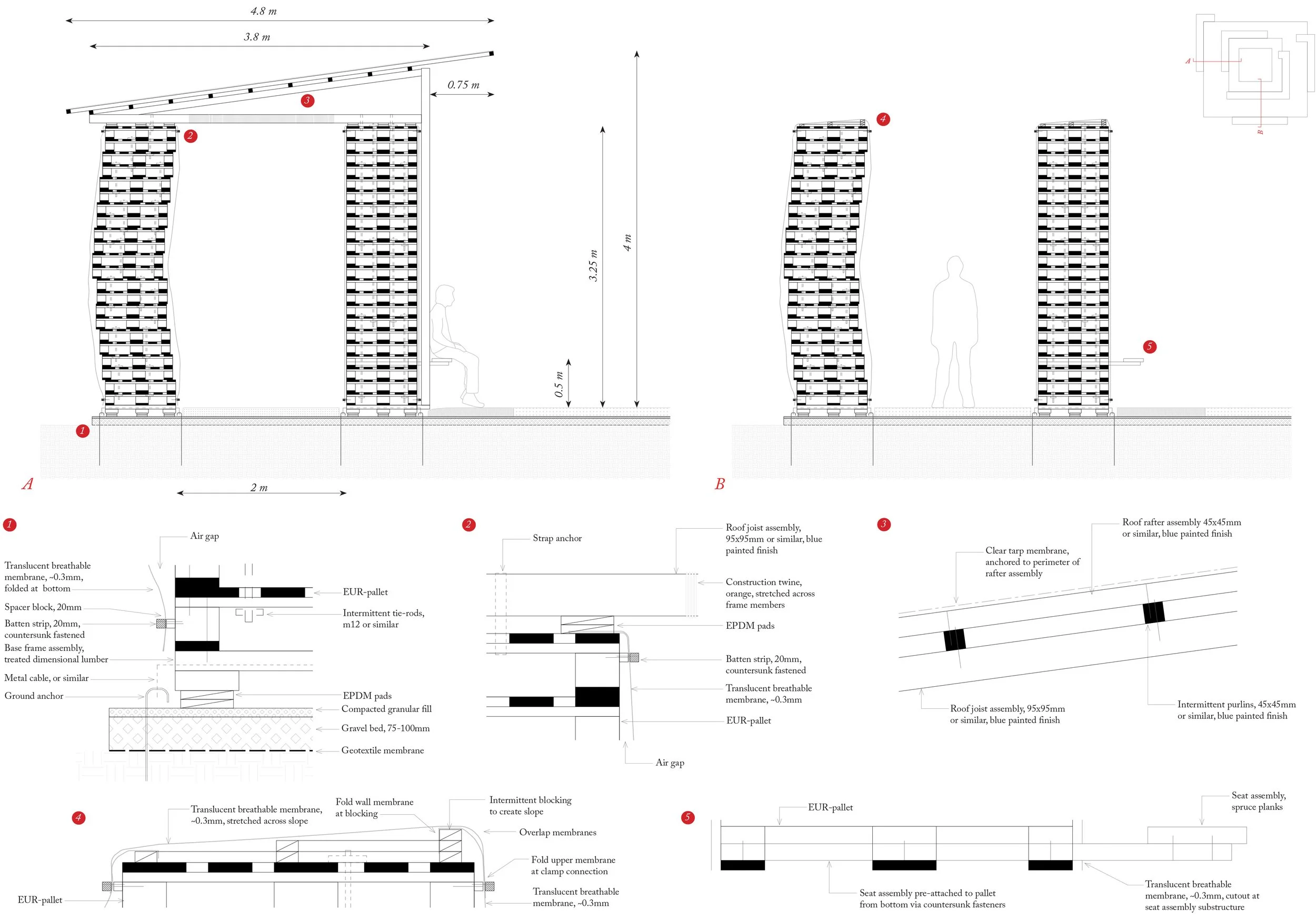
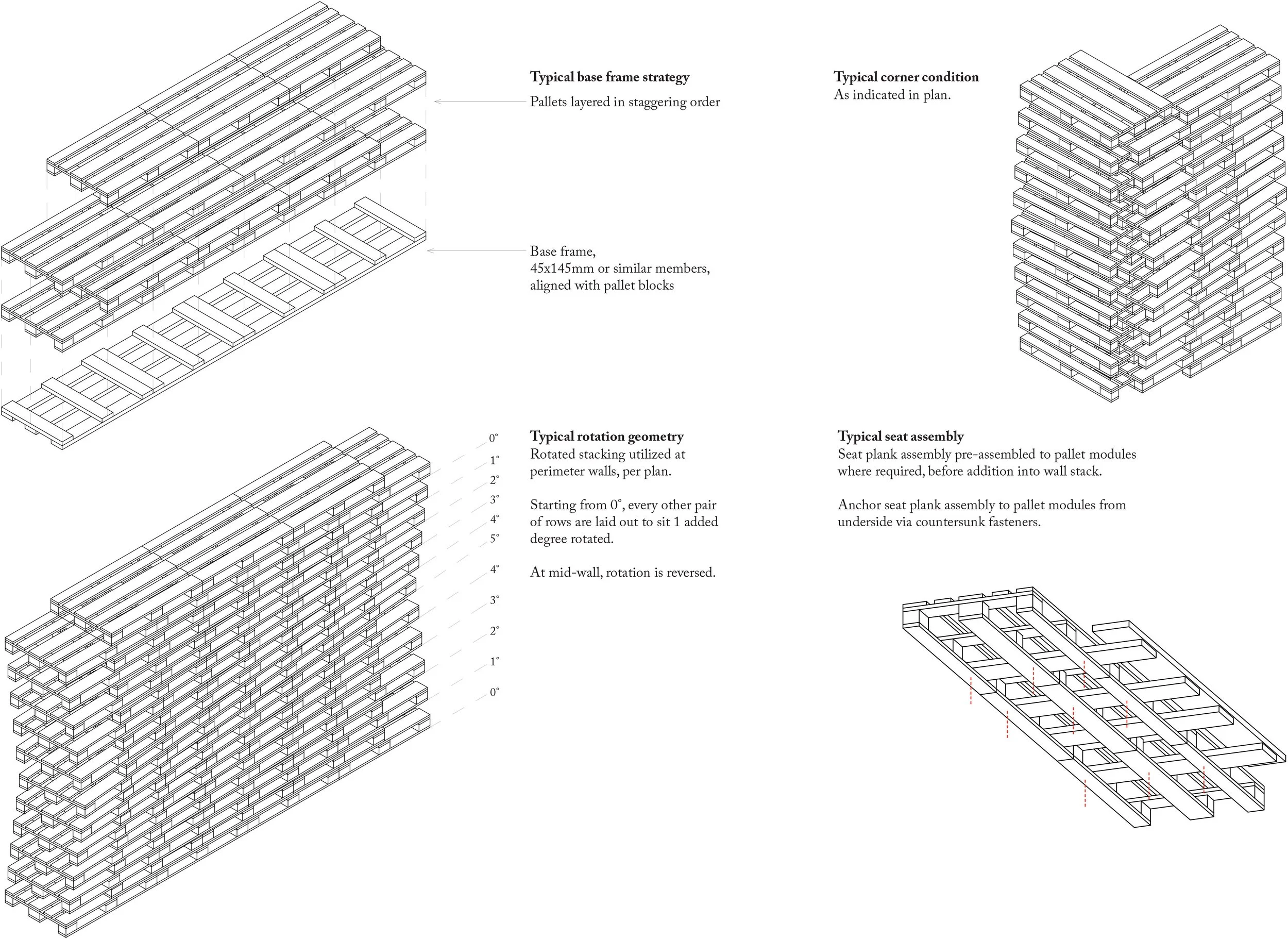
Tectonically, the proposed installation employs rudimentary means applied with intention to craft an extraordinary outcome, utilizing common materials in cunning ways that exploit their proprietary qualities while defying expectations. For the walls, standard industrial EUR-pallets are stacked in a staggered pattern that provides the assembly with an inherent rigidity and sets up apertures that filter light simultaneously. Stacked mass walls are draped with non-woven fabric which acts as a translucent skin, lending the overall constructs a latent quality that oscillates between the monolithic and ethereal depending on light conditions and time of day. Readily available generic materials such as tarp sheets, dimensional lumber, spruce planks, and construction twine are also part of the material palette, catching and filtering light while also subtly utilizing coloration as an architectonic element. For the ground finishes, gravel and bark mulch are used selectively, contributing their specific acoustic, tactile, specular and even olfactory qualities as part of the overall design framework.
Project was designed in response to an open call by Tallinn Architecture Biennale.